Featured
Table of Contents
Signal Types in Angular 21 change FormGroup discomfort and ControlValueAccessor complexity with a cleaner, reactive model built on signals. Discover what's new in The Replay, LogRocket's newsletter for dev and engineering leaders, in the February 25th issue. Check out how the Universal Commerce Protocol (UCP) enables AI agents to get in touch with merchants, deal with checkout sessions, and firmly procedure payments in real-world e-commerce flows.
This post explores six common errors that obstruct streaming, bloat hydration, and develop stale UI in production.
2026 Into Soft Pvt. Ltd. All rights reserved.
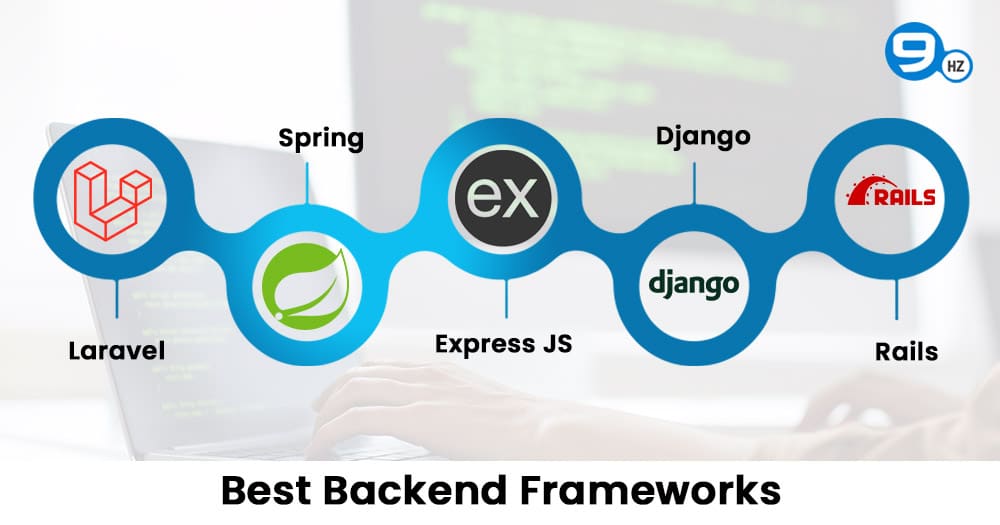
Laravel, Rails, and Django remain the most battle-tested full-stack frameworks in 2026. dominates for React-first apps however requires considerable assembly. Wasp brings the batteries-included experience of Laravel/Rails to the JS/TS environment, with the strongest AI-coding compatibility of the 5. If you want, go Laravel for PHP or Django for Python.

In this guide, we compare the most popular full-stack structures in 2026:,,, and. We likewise include, the framework we're constructing. We believe it's an engaging choice in this area, and we desired to put it side by side with the recognized gamers so you can judge on your own.
Enhancing Scalability with Microservices Architecture
Beyond the typical requirements like developer experience and environment size, we also examine how well each framework plays with AI coding tools like Cursor, Claude Code, Codex, Copilot, and OpenCode due to the fact that in 2026, that matters more than ever. We focused on 5 criteria when examining full-stack structures: How quickly can you go from init to a deployed app? All five structures in this guide can be utilized for full-stack advancement, but they take different approaches: These are the initial full-stack frameworks.
If your definition of full-stack is "deals with whatever from HTTP request to database and back," these frameworks nailed it years ago. Covers client-side making and server-side logic (API routes, server components), but the database layer is completely Bring Your Own (BYO).
Wasp takes a different approach within the JavaScript ecosystem specifically. It uses a declarative setup file that describes your routes, authentication, database designs, server operations, and more in one location. The compiler then generates a React + + Prisma application. Unlike Laravel or Rails, Wasp eliminates the requirement to pick and put together frontend solutions, and bundles whatever within a single mental model.
Key Criteria for Evaluating Modern CMS Software
Laravel has been the dominant PHP framework for over a decade, and it shows no signs of slowing down., Laravel's community is massive and active.
Laravel's consistent conventions and outstanding paperwork mean AI tools can generate fairly accurate code. The PHP + JS split (if using Inertia or a React SPA) means the AI needs to understand 2 different codebases. Bed rails has roughly and a loyal, knowledgeable community.
Rails' strong conventions make it reasonably predictable for AI tools. Like Laravel, the backend (Ruby) and any modern-day frontend (React by means of Inertia or API mode) are separate contexts the AI should handle.

With roughly, Django has one of the largest open-source communities of any web structure. Its killer advantage in 2026? Python is the language of AI and information science, making Django a natural option for groups that require web applications firmly incorporated with ML pipelines. effective, Pythonic database layer with migrations automated admin user interface from your designs the de facto requirement for developing APIs security-first by default NumPy, pandas, scikit-learn, PyTorch Frontend story is the weakest of the 5.
Optimizing Digital Experiences through API-First Methods
Python is the language AI tools understand best, so Django backend code gets excellent AI assistance. The disconnect in between Django's backend and a contemporary JS frontend indicates AI tools struggle with the full-stack picture.

Latest Posts
How AI Refines Next-Gen Marketing Workflows
Innovative UI Design Patterns for Better Engagement
Increasing ROI With Multi-Channel B2B Systems